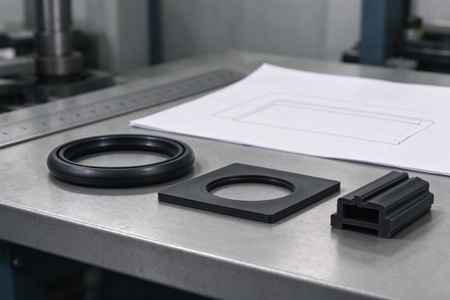
A physical rubber seal sample can be a useful starting point when you need a replacement part or want to develop a custom sealing component. Even if you do not have the original engineering drawing, you can help a supplier evaluate your request by providing clear photos, key dimensions, application details, and expected order quantities.
This guide explains how to prepare a rubber seal sample for quotation and what information to send to a custom rubber seal supplier.
1. Check the Condition of Your Rubber Seal Sample
Before requesting a quotation, inspect the sample and identify any visible damage or wear. This helps the supplier understand whether the sample represents the original design or has changed during use.
- Check for cracks, cuts, deformation, or missing sections.
- Look for signs of swelling, hardening, or surface deterioration.
- Identify worn or compressed areas that may have changed the original dimensions.
- If possible, provide more than one sample for comparison.
If the sample is damaged or worn, tell the supplier. A used part may not accurately represent its original shape or dimensions.
2. Take Clear Photos from Different Angles
Photos help a supplier understand the seal's shape before carrying out a detailed review. Take pictures in good lighting and place the sample on a plain background.
- Overall view: Show the complete seal and its general shape.
- Side view: Show the cross-section, profile, or thickness where relevant.
- Close-up: Show grooves, lips, holes, joints, or other important features.
- Scale reference: Include a ruler or measuring tool to provide a size reference.
For complicated profiles, take photos from several angles. Photos are useful for an initial review, but they may not reveal every critical dimension or hidden feature.
3. Record the Key Dimensions
Measure the sample carefully and record the values with units, such as millimeters (mm). The required dimensions depend on the type of seal and how it fits into the application.
| Seal type | Useful dimensions |
|---|---|
| O-rings | Inside diameter and cross-section diameter |
| Oil seals | Inside diameter, outside diameter, and overall width |
| Flat rubber gaskets | Length, width, thickness, hole positions, and hole diameters |
| Custom rubber profiles | Cross-section dimensions, overall length, and important fitting features |
Use suitable measuring tools and avoid squeezing or stretching flexible rubber parts while measuring. If a dimension is difficult to determine, mark it as unknown rather than guessing.
These measurements help with an initial quotation review. Final specifications may require more detailed measurements, a physical sample inspection, or an approved technical drawing.
4. Explain the Application and Working Conditions
The same seal shape may require different rubber materials depending on its working environment. Share as much of the following information as you can:
- Application: Where is the seal installed, and what equipment does it serve?
- Media: Does it contact water, oil, fuel, chemicals, air, or another substance?
- Temperature: What are the normal and maximum operating temperatures?
- Pressure and movement: Is the seal used in a static joint, a moving assembly, or a pressurized system?
- Material preference: Do you know whether the original seal is EPDM, NBR, silicone, FKM, or another rubber compound?
If the material is unknown, describe the operating conditions and ask the supplier to recommend a suitable option. Appearance alone is generally not enough to identify a rubber compound reliably.
5. Provide Quantity and Order Requirements
Order quantity and purchasing requirements can affect tooling decisions, production planning, packaging, and unit pricing. Include the following details in your inquiry:
- Estimated sample or prototype quantity, if required.
- Expected initial order quantity.
- Estimated annual or repeat order volume, if known.
- Required delivery destination and preferred shipping terms.
- Target delivery date, if there is a firm schedule.
- Any inspection, packaging, labeling, or documentation requirements.
If you only need a small quantity for testing, state that clearly. The supplier can then assess whether a sample, prototype, existing tooling, or a new mold may be appropriate.
6. What Can a Supplier Confirm from a Sample?
Depending on the sample condition and the complexity of the design, a supplier may be able to provide an initial assessment of manufacturing feasibility, possible materials, estimated pricing, and tooling requirements.
However, a sample alone may not provide enough information to confirm every specification. Before production, the buyer and supplier should agree on critical dimensions, material requirements, tolerances, and any applicable performance tests.
For custom production requirements, see our custom rubber seals and OEM and custom manufacturing pages.
7. Copy This Rubber Seal Quotation Request Template
You can use the following template when contacting a supplier. Fill in the information you know and leave unknown items for discussion.
Subject: Custom Rubber Seal Quotation Request
Hello,
We are looking for a supplier to manufacture a custom rubber seal based on an existing physical sample.
Seal type: [O-ring / oil seal / gasket / rubber profile / other]
Application: [Equipment or intended use]
Known dimensions: [Dimensions and units]
Material: [Known material or not yet confirmed]
Operating conditions: [Temperature, media, pressure, or movement]
Initial quantity: [Quantity]
Expected repeat quantity: [If known]
Delivery destination: [Country or region]
We can provide photos and further measurements of the sample. Please advise whether you can review this requirement and provide an initial quotation, including any tooling or sample costs if applicable.
Best regards,
[Name / Company]
8. Request a Review of Your Rubber Seal Requirement
Preparing clear photos, reliable measurements, application details, and quantity estimates can make the quotation process more efficient. If some information is unavailable, explain what you know and ask the supplier which additional details are needed.
QWS supports inquiries for rubber seals and custom sealing components. To discuss your sample and requirements, please contact our team with the available photos and specifications.
Frequently Asked Questions
Can I request a quotation using only a physical rubber seal sample?
Yes, a sample can be a starting point for an initial review. The supplier may still need measurements, application details, material requirements, or additional samples before confirming the final specification and price.
What if my rubber seal sample is worn or damaged?
Send clear photos and explain the condition of the sample. If possible, provide an unused sample or compare multiple parts. Worn dimensions may not match the original design.
Can a supplier identify the rubber material from its appearance?
Not reliably in every case. Different rubber compounds can look similar. The original material specification, application information, or appropriate testing may be needed to confirm the material.
Will a custom rubber seal require a new mold?
It depends on the design, dimensions, production process, and availability of suitable existing tooling. Ask the supplier to confirm tooling requirements and any associated costs before placing an order.