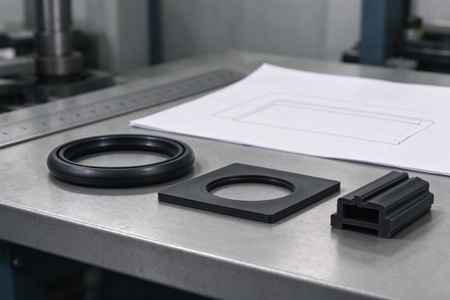
A clear request for quotation (RFQ) helps a rubber seal supplier understand your requirements and assess the most suitable manufacturing approach. Missing specifications can lead to additional questions, inaccurate estimates, or delays during the quotation process.
Whether you are purchasing replacement seals or developing a new custom component, this checklist explains what to prepare before requesting a quotation from a rubber seal manufacturer.
1. Identify the Rubber Seal Type
Start by identifying the type of sealing component you need. Different designs may require different manufacturing processes, measurements, and technical information.
- Rubber O-rings
- Rubber oil seals
- Flat rubber gaskets
- Custom molded rubber seals
- Extruded rubber sealing profiles
- Other application-specific sealing components
If you are unsure of the exact product type, provide photos, a sample, or a description of where the component is installed.
2. Prepare Drawings, Dimensions, or Sample Information
Provide an existing engineering drawing if one is available. A useful drawing may include dimensions, tolerances, cross-sections, material specifications, and other critical features.
If you do not have a drawing, you can start with available measurements, clear photographs, or a physical sample. Explain which dimensions have been measured and which still need confirmation.
For more guidance, read our article on requesting a custom rubber seal quote without a drawing.
3. Specify the Rubber Material
Material selection affects sealing performance, durability, chemical compatibility, and temperature resistance. If the material is known, include the grade or specification where possible.
- EPDM: Often considered for water, weather, and outdoor sealing applications.
- NBR: Commonly considered for applications involving oils and certain fuels, depending on the compound.
- Silicone: Used in applications where flexibility and temperature performance are important.
- FKM: Considered for certain demanding temperature and chemical environments.
These are general examples, not universal material recommendations. Suitability depends on the specific compound, operating conditions, and applicable requirements.
If you do not know which material is suitable, describe the working environment and ask the supplier to review the options. You can also visit our rubber materials page.
4. Describe the Operating Conditions
A rubber seal must be suitable for its actual working environment. Include the following information wherever it is available:
- Contact media: Water, oil, fuel, air, chemicals, or other substances.
- Temperature range: Normal operating temperature and expected extremes.
- Pressure: Whether the seal is used in a pressurized system.
- Movement: Static sealing, reciprocating movement, or rotary movement.
- Installation: Groove, housing, shaft, flange, or other installation details.
- Service expectations: Expected operating life or maintenance requirements, if known.
These details help the supplier evaluate material and design considerations. Avoid relying on a general product name alone to determine suitability.
5. Confirm Critical Dimensions and Tolerances
Not every dimension has the same importance. Identify the measurements that affect installation, compression, sealing performance, or compatibility with mating parts.
- Overall dimensions and cross-sectional measurements.
- Inside and outside diameters where applicable.
- Thickness, width, and profile geometry.
- Hole positions, grooves, lips, or other functional features.
- Required tolerances for critical dimensions.
If tolerances are not specified, ask the supplier to review the design and propose appropriate manufacturing tolerances for your application. Critical requirements should be agreed upon before production.
6. State the Order Quantity and Forecast
Quantity information helps a supplier assess production planning, tooling, and pricing. Include as much of the following as possible:
- Prototype or sample quantity.
- Initial production order quantity.
- Expected annual demand or repeat order volume.
- Whether multiple sizes or specifications are required.
- Whether the order will be placed in one batch or across several releases.
If the final quantity is not confirmed, provide a reasonable estimate or ask for quotations at different quantity levels. Make clear that the figures are estimates rather than confirmed purchase commitments.
7. Include Tooling, Quality, and Documentation Requirements
Custom rubber components may require dedicated tooling, depending on the design and available manufacturing options. Ask the supplier to clarify any tooling charges, sample costs, and conditions before approving production.
Also state any requirements for:
- Material certificates or test reports.
- Dimensional inspection and quality records.
- Product identification, labeling, and packaging.
- Applicable industry or customer specifications.
- Sample approval before mass production.
Only include standards or certifications that your application actually requires. If a requirement is unclear, identify it as a point for confirmation rather than assuming it is included.
8. Confirm Delivery and Commercial Details
Complete the RFQ with the commercial information needed to evaluate the quotation:
- Delivery country and destination.
- Required delivery date or target lead time.
- Preferred shipping method, if known.
- Requested quotation currency.
- Preferred shipping terms, if applicable.
- Any special export packaging or shipping documentation requirements.
If you need international delivery, clarify the agreed shipping terms and which party will arrange transport, insurance, customs clearance, and related charges.
9. Copy This Custom Rubber Seal RFQ Checklist
Use the following checklist to organize your information before contacting a supplier.
- Product type and intended application
- Engineering drawing, dimensions, photos, or physical sample
- Material specification or operating environment
- Critical dimensions and required tolerances
- Temperature, contact media, pressure, and movement
- Prototype quantity and estimated production quantity
- Tooling, testing, inspection, and documentation requirements
- Delivery destination and target delivery date
- Packaging and shipping requirements
You do not need to have every detail finalized before making an initial inquiry. Clearly identify what is confirmed, what is estimated, and what requires the supplier's technical review.
10. Request a Custom Rubber Seal Quotation
A well-prepared RFQ makes it easier for a supplier to understand your project and identify missing information before quoting. It can also help reduce unnecessary clarification during sample development and production planning.
QWS handles inquiries for rubber seals and custom sealing components. Learn more about our custom rubber seal solutions or OEM and custom manufacturing services.
To discuss your specifications, quantity, or application, please contact our team with the information currently available.
Frequently Asked Questions
Do I need a complete engineering drawing to request a quotation?
Not always. An initial review may be possible using a physical sample, photographs, and available measurements. The supplier may need additional technical information before confirming the final specification and price.
What information is most important for an accurate quotation?
The most useful information usually includes the seal design, critical dimensions, material requirements, operating conditions, order quantity, and delivery destination. The exact requirements depend on the product and application.
Should I specify the rubber material in the RFQ?
If you know the required material, include it in your inquiry. If you are unsure, describe the operating conditions and request a technical review. Material suitability should be confirmed against the actual application.
Can I request prices for different quantities?
Yes. You can request quotations for several estimated order quantities to compare unit pricing and tooling considerations. Make sure the quantities are clearly identified as estimates if they are not confirmed.
When should specifications be finalized?
Critical dimensions, material requirements, tolerances, inspection criteria, and other agreed specifications should be confirmed before production begins. Any changes should be reviewed with the supplier before implementation.